
You’re a great coder.
You know a talented artist. A friend who can magic up amazing music. You’ve got an idea for a game mechanic that you’re sure is the next killer USP that will turn the games industry on its head.
You and your team pull it all together. It’s brilliant. It gets uploaded to a corner of the internet. A handful of people play it. Life moves on…
Sound familiar? It’s a story relatable to many.
But your chances of wider reach and commercial success increase if you get to know more about the industry and its workings. About how to craft a compelling elevator pitch. Build a deck with a clear outline to market. How to properly budget. How to secure the creative rights of your IP. In short, building up your own arsenal to become more confident about the industry – and yourself – and creating your own luck with that knowledge.
Booting up
Towards the end of November 2025, Liverpool Game Dev Network (as it was known then before relaunching as Liv Games Network) hosted its inaugural Games Pitching Bootcamp, held over two days and open to indie devs and small studios. It included workshops, expert talks, and masterclass sessions designed to help sharpen specific business skills, learn how to pitch and gain confidence with publishers.
The bootcamp also had a competitive element to it. Indie teams with an idea, who took the lessons on-board, built a professional pitch deck for their concept and submitted it. Their work was then judged by a panel of experts on the second day, with the chance to win £1,000 to reinvest into their project.
“A great thing about the bootcamp was that it gave developers, who might never have had much of an opportunity to pitch before, speak to people who have been there and done it,” says Marek Smagala, founder of Liv Games Network.
“There were judges there with, say, 20 years experience working in games publishing. To be able to interact with those people with top-level industry pedigree and get feedback from them was a brilliant opportunity with enormous value that LGN was able to provide. There aren’t many events that do that in the North West.”
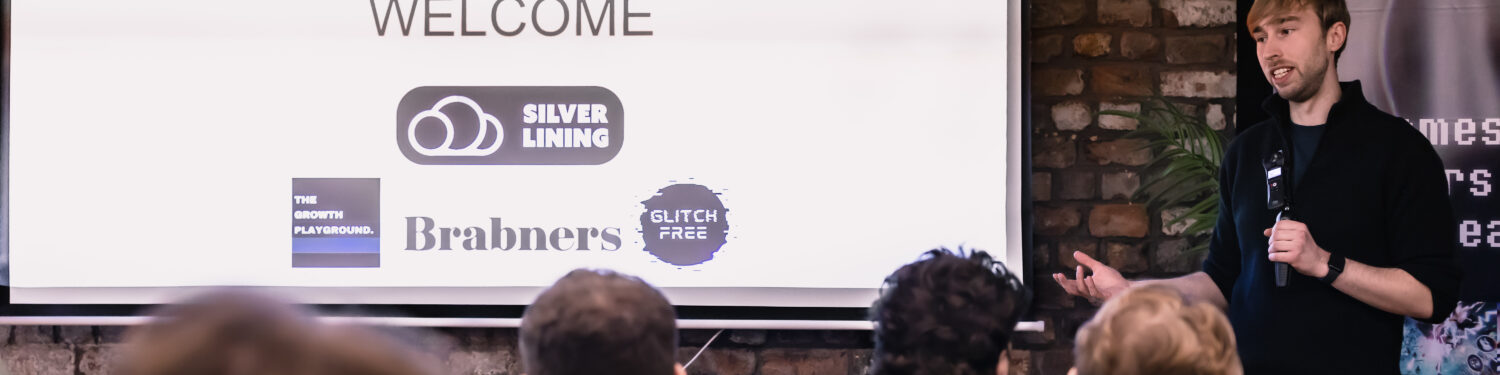
The first day (26 November) was all about knowledge-sharing. Silver Lining Interactive – involved in publishing hits including Dave the Diver, Bendy and the Ink Machine, Teenage Mutant Ninja Turtles: Shredder’s Revenge and others – gave a presentation on how (not) to pitch to a publisher alongside a seminar from legal firm Brabners focusing on IP rights, business contracts, corporate structures and more.
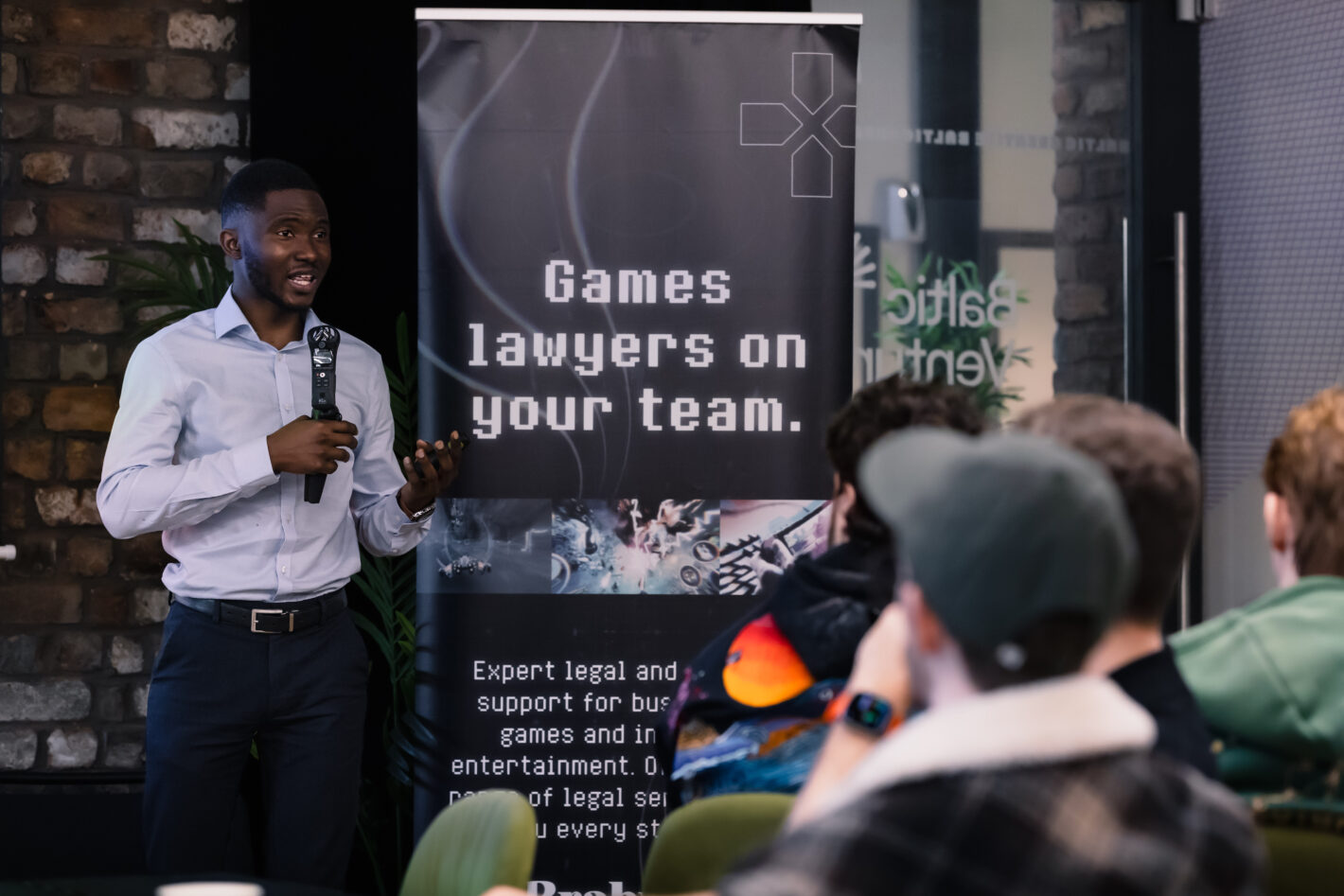
Brabner’s delivered a talk around partnerships, copyright and IP. Pictured: Olayanju Phillips. Credit: Corrupted Lens.
After lunch and networking, GlitchFree Accounting gave indie devs advice on how to build stronger financial foundations to start on a real career in the industry. Talks continued into the second day, too, with Rebecca Robinson from The Growth Playground introducing a seminar on how to develop an investment mindset.
“The actual industry side of it can be very daunting. There are pockets of information out there that devs can use to create a whole new path for themselves,” Marek adds.
“So we wanted to bring it all together under one roof with the bootcamp. Why shouldn’t devs be able to convert their skills into some actual financial success or some reputational good?”
Game plan
Day one ended with pitching masterclass sessions from Silver Lining Interactive – then it was competition time. Devs that received pitch deck masterclasses came back the following week to present their idea to a panel of judges, made up of Matt Southern of Gametools.io, Pete Smith, formerly of Tencent, Marcia Deakin, co-founder of Next Gen Skills Academy, and Craig Howard, Creative Director at Lucid Games.
“The idea was that the bootcamp should reward devs that are willing to go out and try something. The devs who aren’t just waiting for things to happen to them. The ones showing some initiative,” Marek explains.
“It takes some real guts to do that. Teams had to think on their feet and make a pitch deck then put their ideas for a game in front of really top-calibre professionals. But if you can use that to your advantage and learn from it, that’s where growth lies, you know?”
The winning pitch was made by Thomas Mcintosh, Sam Hill and Luke Dutton for their turn-based solarpunk RPG concept, SunTide. “Genuinely, I think by the time they were announcing the winners, we were pretty much like, ‘Okay, it was a good learning experience at least!’” Sam laughs.
“We didn’t realize how quick the four-day deadline was coming up when we entered the competition,” Tom adds. “We initially thought we had about three weeks to get it done! The bootcamp was actually our first time interacting with LGN.”
“We saw it and thought it would be a really cool opportunity. We got a ticket and, before we knew it, we had built a pitch deck in about four days.”
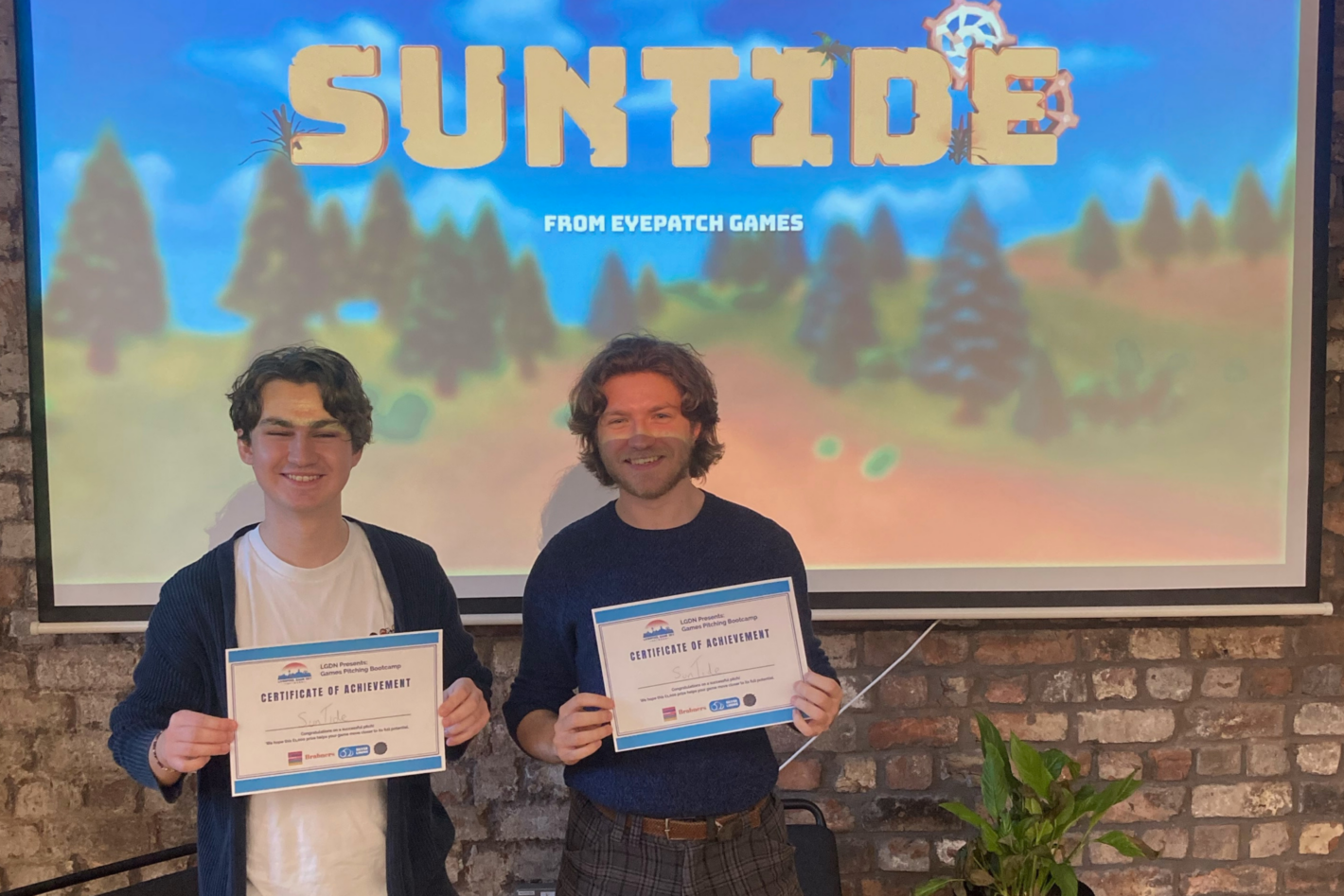
Sam (L) and Tom (R) after their winning pitch.
The trio have since started their own indie studio, Eyepatch Games. Sam, Tom and Luke are looking to continue developing SunTide, and are using the practical experience gained from the bootcamp – alongside a lifetime of honing their craft – to gain real footholds in the industry they love.
Brought up to code
Both from Wigan, Sam and Tom met in school and had a shared passion for gaming. Destiny 2 and Smash Brothers were firm favourites, (with Tom grudgingly conceding Sam is the better Smash player).
“We’ve both been to the same school, same college, same uni. It’s not like it was a specific plan or anything. We both found a similar passion and have kept it up from there,” Sam says.
“So I chose IT in school. You learn concepts such as general programming. But then we had a specific game development module in college which was the first big jump into it for both of us. It was the most fun we had back then.”
Tom’s path was a little different as he chose to do a BTEC in Construction at GCSE – but the pull of gaming was too strong, and he switched to the Computing course in the college he went to with Sam. “I used SketchUp as part of the BTEC course. It was a playground of shapes. I really loved that side of using it. I’d load up Unity on my laptop and have a quick play around with it just to see what it was like in my spare time. I’d seen the Computing course at college, decided to completely pivot and go for that instead.
After mulling over which university to attend, they settled on University of Chester’s Games Development BSc (Hons) course. Soon, they would put the skills they had learned through the years together for the createChester Game Jam in 2023. Sam and Tom created a perspective-bending 2.5D platformer called Super Dash Adventure which won first place and spawned two further releases. It was the first fully-realised project they had worked on together.
Sun-stoppable
In their third year at the University of Chester, Tom met Wirral-based artist, Luke, who soon became friends with Sam as well.
“Chester was somewhere I could apply the artistry I had learnt through my education so far, but also finally get a chance to study computer science, which I had been unable to do at GCSE level,” Luke explains, highlighting the visual, narrative and puzzle designs of Professor Layton and Ni No Kuni as his gaming inspirations.
“I got to know Tom when we collaborated on a project in our third year. We got close after we spent many hours in the night debugging and fixing the project code before the submission deadline. I worked on producing randomly-generated dungeons. It’s quite funny to look back on it now, but at the time it was so stressful!”
The trio’s individual and collective experiences at Chester would eventually form the basis of SunTide. “I did a whole thing on turn-based combat for my dissertation,” Sam says. “I wanted to take that and make it into something a bit more full-on.”
“We really liked the concepts that we introduced in our third-year project, so we wanted to spin an idea off of that,” Tom says.
“We started building characters, we started getting ideas for this world, but we didn’t really have the mechanics. And then one day, Sam was in the flat and we started talking about an idea that he had for his turn-based mechanics that he thought would be really cool.”
For Luke, the opportunity to expand on the SunTide idea was a release from the stress of coding for coursework, and indulging in a more personal project. “We had come up with the SunTide concept around July – it was something a bit more story focused and something that we could work on for fun, as a portfolio piece.
“I designed some character sketches that were in the presentation pitch deck,” Luke adds.
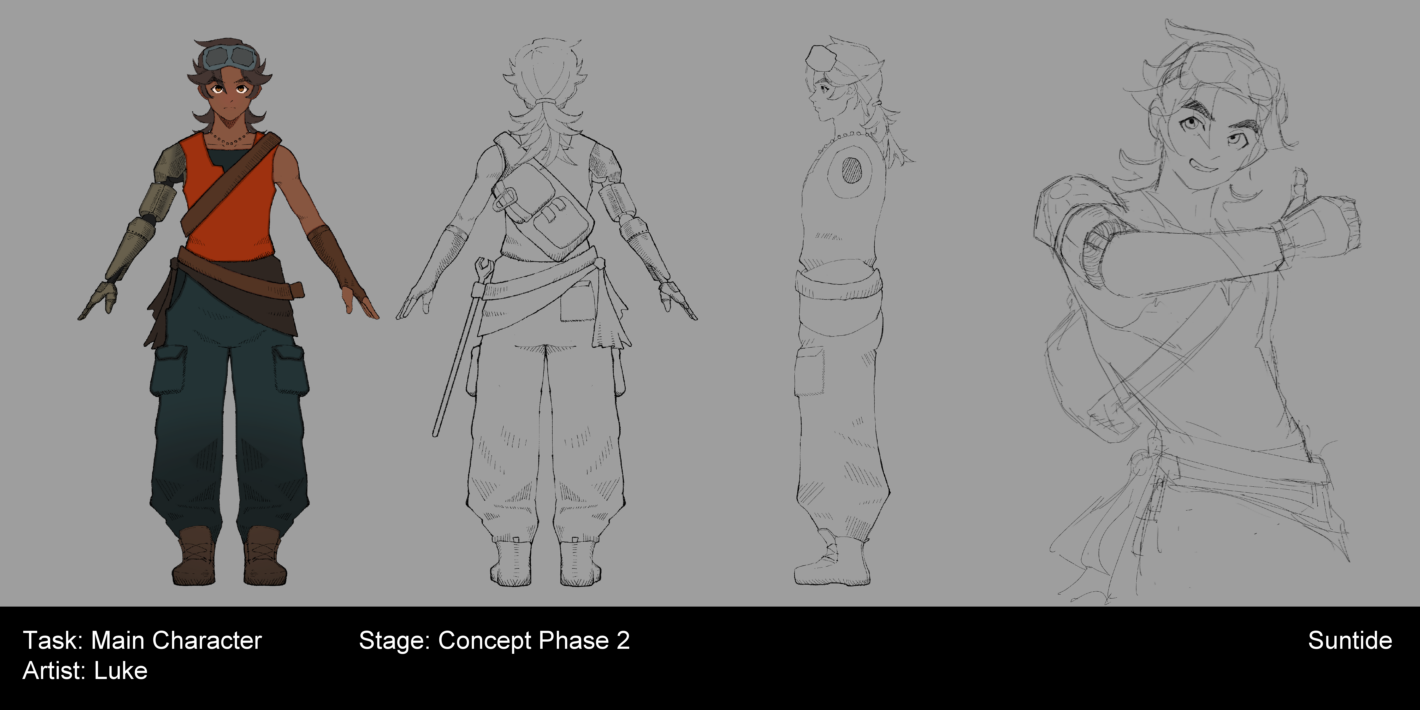
Character concept for SunTide. Credit: EyePatch Games
“The style has shifted towards a more ‘JRPG’ vibe,” Luke explains. “Currently I’m working on character design and visual development. I’m putting my dissertation skills to work and am hoping to apply the programming skills that I learnt from uni on the project soon.”
“We took all our ideas from there and brought it all together,” Tom adds. “That was how SunTide started, and we’ve been building it ever since.”
Pitch perfect
Sam reflects on the bootcamp experience. “On that first day, we had masterclass sessions, on-site events,” he explains. “Industry people were giving talks on game development and the other important things around it – pitching games, selling them, things like accounting, managing finances during the game development process… And then, because we’d submitted the pitch for the competition side of it, we got a little one-to-one session with Silver Lining Interactive.”
“They’re primarily an indie focused publisher. But we got to sit down with one of the staff members, Eben Cunningham, who was a really nice guy,” Tom adds. “We showed him our pitch deck and we just sat there and went, ‘Rip us apart’! Tell us what’s bad, tell us what we can improve on, tell us what you think is good…”
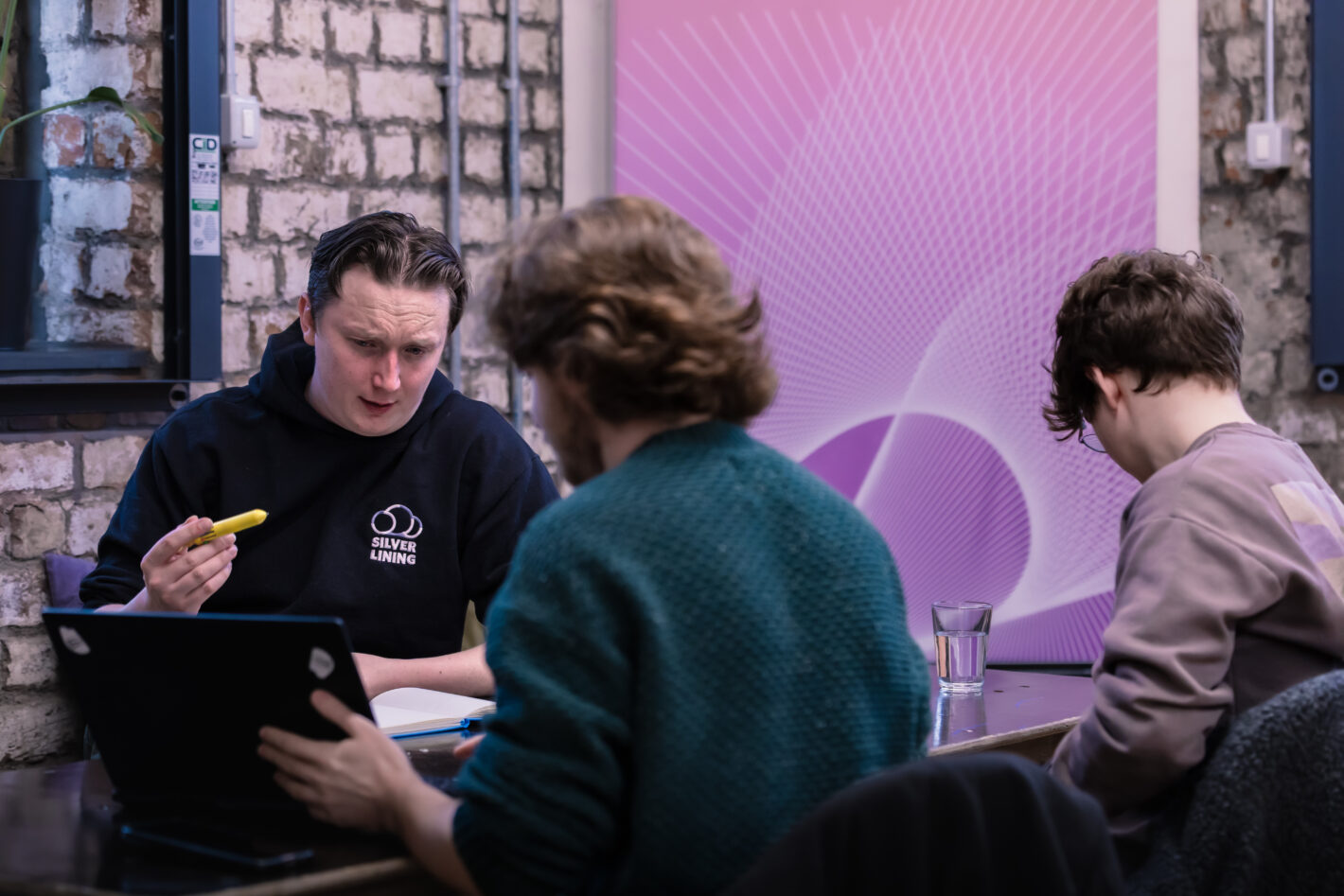
Tom and Sam receiving a masterclass from Silver Lining Interactive’s Eben Cunningham. Credit: Corrupted Lens
“We wanted to learn a bit more from someone who could see the project not just from a developer’s point of view, but from someone who has publishing experience. Eben mentioned a few things that I guess we hadn’t properly considered. It was really insightful to see his side of it.”
“It was the mechanics of the game that the judges enjoyed,” Marek says. “As well as giving participants knowledge, the bootcamp was also about giving developers some confidence, some real-world experience and, in the case of Sam, Tom and Luke as winners, some financial assistance to move forward.”
Their journey so far shows that the bootcamp wasn’t the beginning, and it certainly isn’t the end. “For now, we’re going under Eyepatch Games for the foreseeable future,” Sam explains.
“We’re still trucking along, developing bit by bit to pay the bills. The plan for the next year or so is trying to get it to a good enough state to where we can pitch it for any kind of funding opportunities we can, so we can dedicate more time to SunTide. Bit by bit, it’ll get there eventually. And then we’ll hopefully have something to show for it at the end, something more like a complete project.”
Their £1,000 winnings from the bootcamp are helping with that. “We’ve begun reaching out to some local artists to help establish our visual identity and branding as Eyepatch Games,” Sam explains. “Moreover, we’re looking into licensing some assets to support us as we develop the game’s world and environments. We plan to use the funds to establish a website to advertise our studio and SunTide; however, we first want to make sure the game is far enough along to be presentable before doing that.”
Fleshing out the idea for SunTide, their pitching experience and discussions they had at the bootcamp have given them broader scope to do that. An application for Transfuzer – an initiative that helps UK graduates to start on the path towards building their own fully-fledged studios – is one they’re currently working towards.
“We can apply for Tranzfuser up to two years after we graduate,” Tom explains. “So our main goal right now is to get a demo done by April, the first hour of gameplay, so that when it comes to pitching to Tranzfuser, we can try and get a bit more funding.
“That also means we can get a couple more eyes on the project and we can, maybe, learn a couple more things that we maybe still haven’t considered yet. In the short-term, that’s what we’re driving towards right now.”
For Marek, Liv Games Network’s first ever Games Pitching Bootcamp was a success, exemplified by the path the Eyepatch team took in showing up, investing their time, opening themselves up to learning more about the industry, and winning the competition.
“Bringing all of this together and helping to start people on their journeys, supporting them and more… That’s the responsibility of a network, to empower our community. And in an increasingly volatile industry, moments like this are really precious, and are very integral to keeping things moving,” Marek says.
“If we can do that in our own way – then we’ve done our job as Liv Games Network.”